Bottom of the Hill
Well damn. The Bottom of the Hill, a night club featuring local and indie touring acts in the Potrero Hill neighborhood of San Francisco announced its plan to close by the end of the year. BOH opened in 1991, the year before I moved to San Francisco to become an artist. I spent more time there drinking, socializing, watching or performing live music than any other club in the city where I didn’t work.
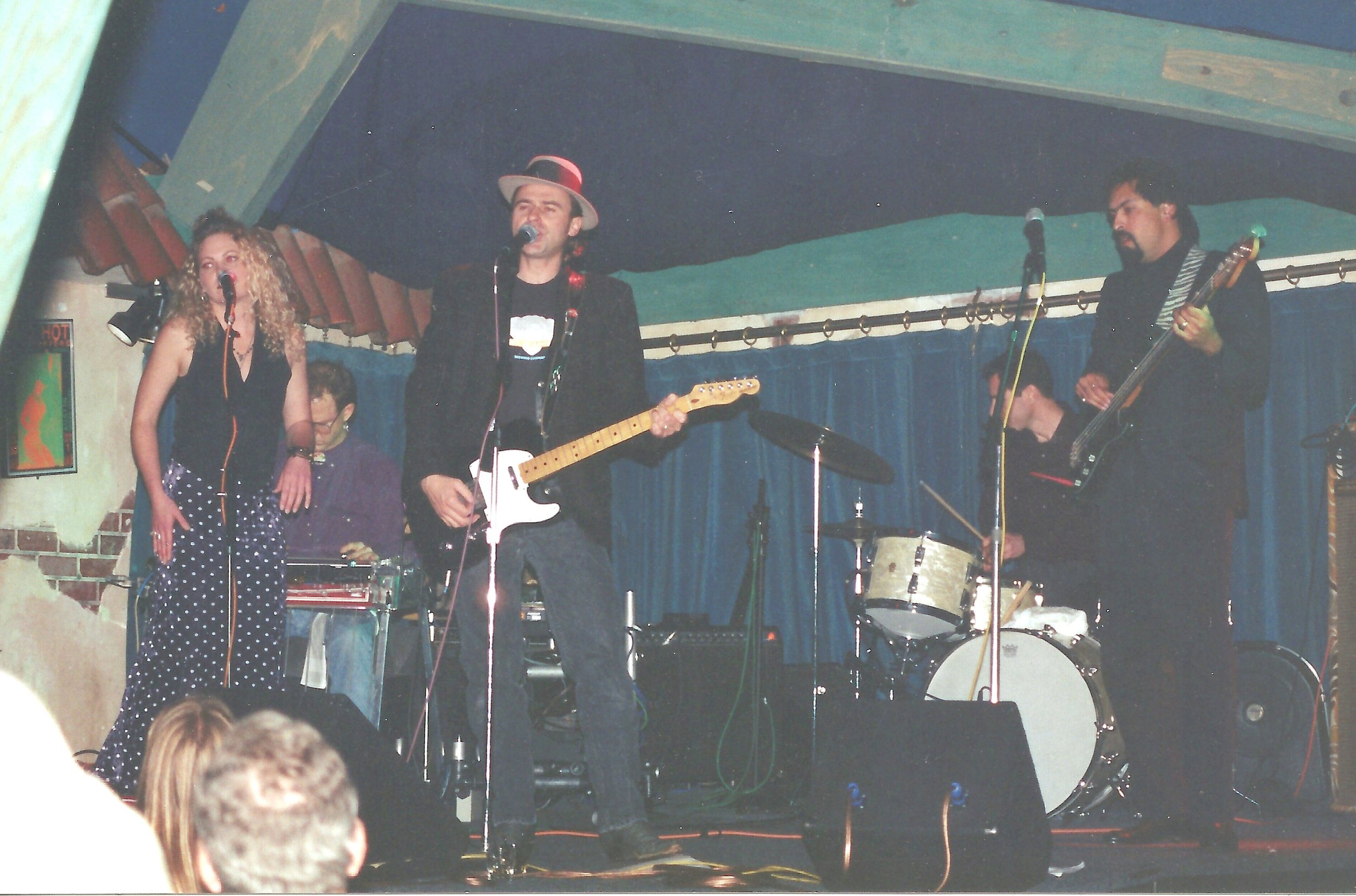
Western Electric 1993
Last June I published a memoir, Swollen Appetite set in 1990s San Francisco when I was full of longing and whiskey, and hell bent on becoming a musician. So many friends and readers told me the memoir took them back to their own experiences walking the street of SF, young and full of it. I started the blog, Who Did We Think We Were , to be a home to others’ stories exploring the incredible ache of youth. The longing that festered and expanded, sometimes led to a body of work, and sometimes led to an exit. In my case it was both. Most of the contributors to this blog colony have used the backdrop of 1990’s San Francisco, so maybe “Who Did We Think We Were” is a form of digital amber where we can memorialize in any way the contributor choses.
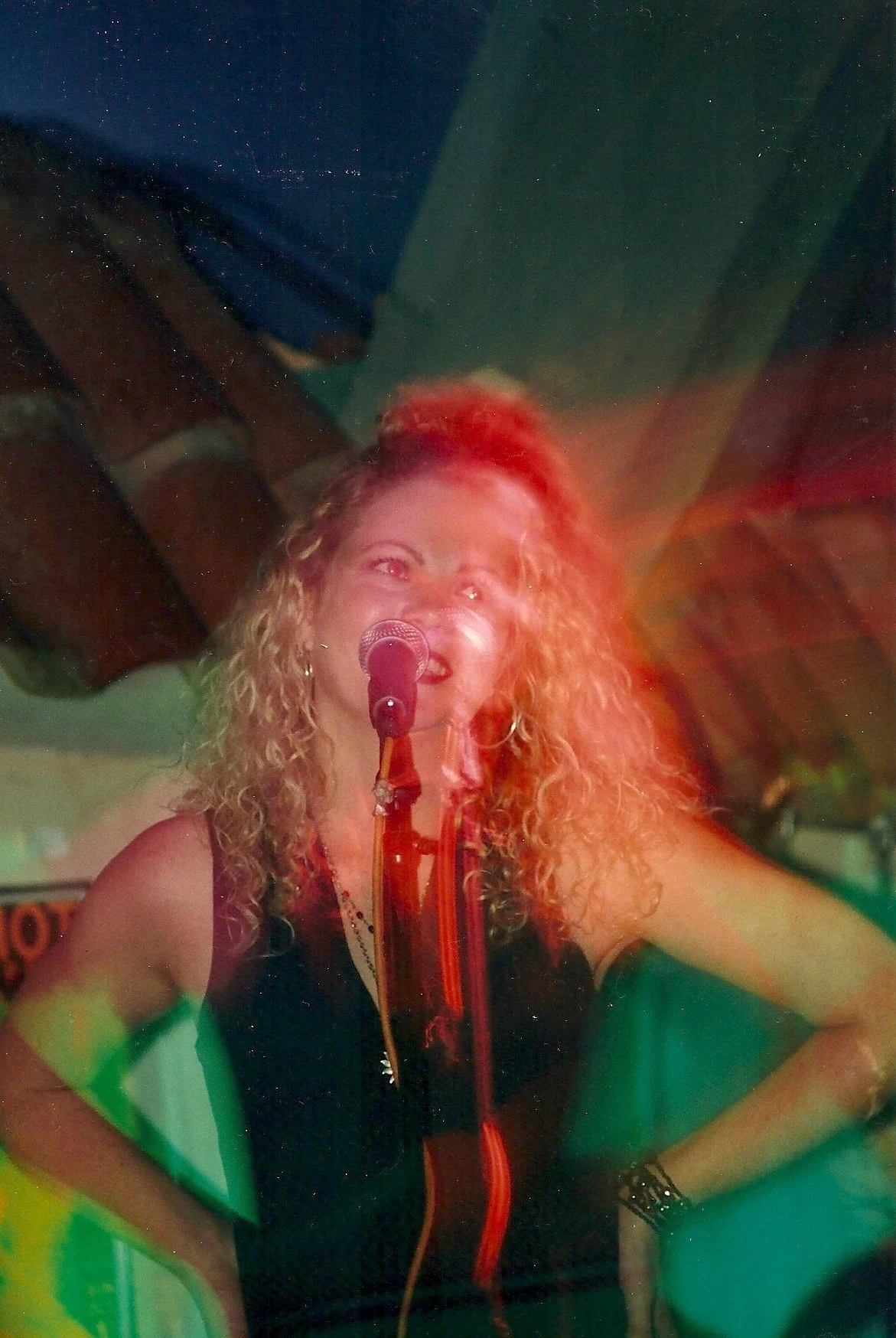
Sandy on stage BOH 1993
From Swollen Appetite, Here’s an antecdote to memorialize The Bottom of The Hill.
“I boarded the 22 Fillmore to the Bottom of the Hill to see Howe Gelb perform solo. His band Giant Sand had been one of my favorite indie-rock groups. The brakes hissed as the driver slowed and the trolley pole click-clicked as it connected and juiced along the overhead electric lines. The bus whined up the hills, then ground to a halt at the end of every block in the lower Haight and through the Mission to Potrero Hill. I bobbed and jerked in my seat, then got off a few blocks away from the nightclub to get a smoke in before the show. I weaved around strewn car-window glass—a thief’s mosaic glittering under the streetlights that lit up the fronts of warehouses, some abandoned, some still in use. I showed my ID at the door and paid admission, then grabbed a Bass ale at the curved bar and headed out back to the patio to smoke. Christmas lights were strung across the patio and Howe Gelb stood tall as a tree under them, talking to whoever stepped up. Girls swarmed him, and I inched closer and tried to act nonchalant. He laughed and admitted that his daughter was crazy about Barney, the purple dinosaur from the popular TV show. Someone scoffed, “Ewwww, Barney!” Trying to score points, I jumped to defend Howe’s little girl’s taste in celebrity dinosaurs. During the show, I got blasted, drunker than shit, and wrote a messy poem in the blank margins of the venue’s monthly show calendar. I presented it to Mr. Gelb after the show. He signed it and handed it back to me: “Keep on waxing. Love, Howe.”
I wanted more.
As the crowd thinned out and I wobbled at the bar, Ramona, the bar owner and bartender that night, told me to go sit my wasted ass on the curb outside and wait for the cab she’d called me. “Go home,” she admonished.
It wasn’t the first time that tough, beautiful broad took care of me—or, I reckon, a thousand other drunks.”
Consumption
Here comes the cab
The headlights expose warehouse desire
I stumble at the curb
A blanket of booze that warmed me from the inside out
Is tangled around my feet
Grace is not my best feature—I have too many teeth
Wanting to tear into a jugular that spews beauty
Beauty is terror (damn straight)
I want him in my bed
I seek what he does
I am a two-headed barracuda constantly consuming
(pages 161-162) This poem turned into the song below a few years later. The Washington Post had nice things to say about The Bellyachers in 1998.